MOBUILDING is an Erasmus+ Policy Experimentation initiative that aims to develop a strategic and sustainable approach to support, expand and institutionalise apprenticeship mobility in the building sector across Europe.
A critical industry to Europe’s economy, as it is the building sector, needs action. Designing and implementing a digital and physical network and infrastructure to facilitate effective apprenticeship mobility, enhancing the capacity of VET providers, employers, and other stakeholders to engage in and support high-quality mobility experiences, address the legal, cultural, and educational barriers to mobility and promote more inclusive and accessible opportunities.
Through these strategies and new resources, MOBUILDING will directly contribute to achieve the EU’s target of 8% mobility of VET learners, improve employment outcomes by aligning training more closely with industry needs, strengthen VET systems through sector-specific focus and transnational collaboration, and enhance policy integration by providing valuable insights and data to support the refinement of VET policies at both national and European levels.
Main objectives
The MOBUILDING project meticulously pursues enhancing the infrastructure for apprenticeship mobility, making it more efficient, scalable, and aligned with both regional and EU-wide policy objectives. With that focus on this core objective, the project also addresses:
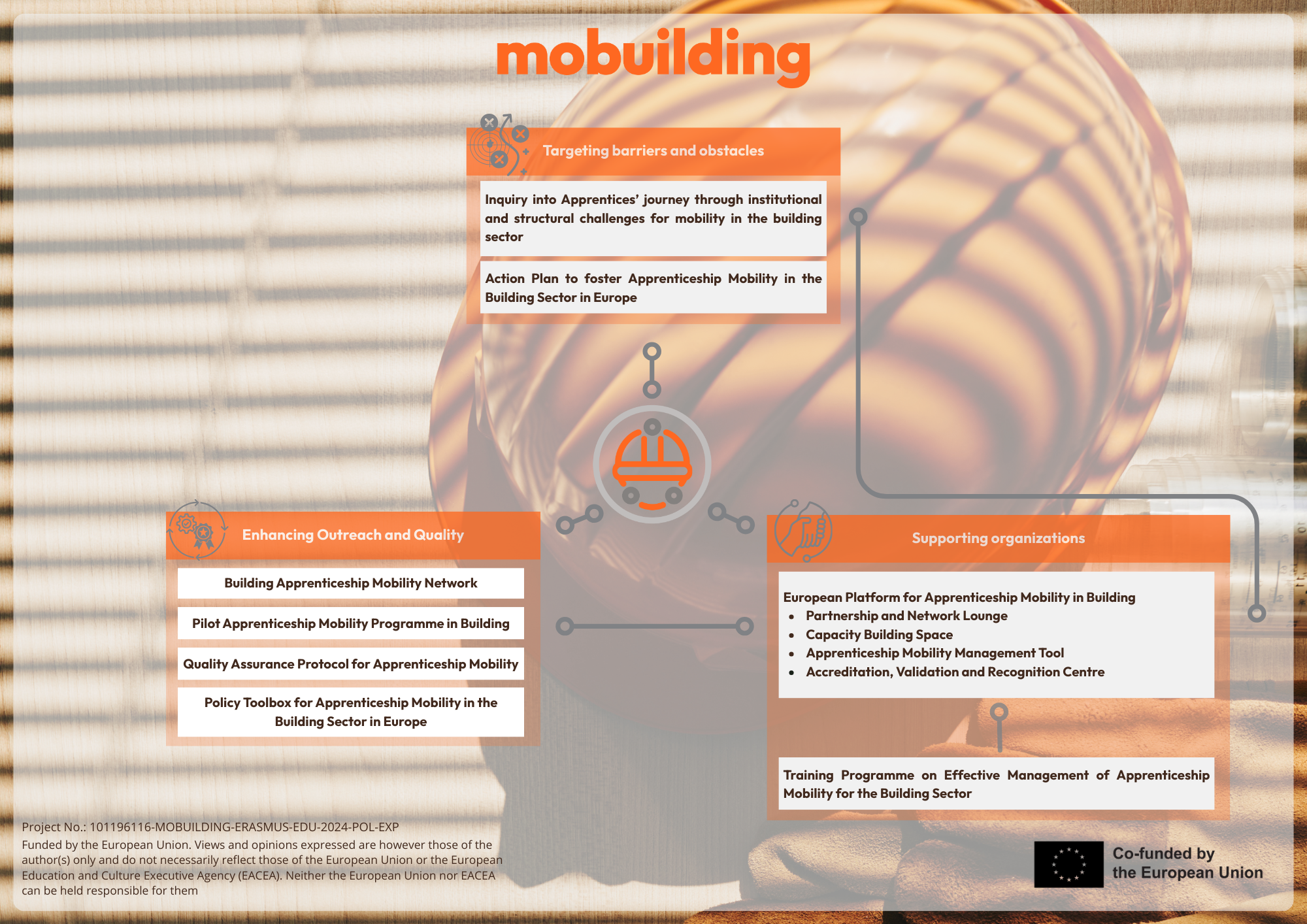
1. Targeting barriers and structural obstacles to mobility of apprentices by:
- Develop an Inquiry into Apprentices’ journey through institutional and structural challenges for mobility in the building sector to identify key obstacles.
- Formulate an Action Plan to foster Apprenticeship Mobility in the Building Sector in Europe, providing a strategic, evidence-based framework to address barriers in mobility of apprentices.
2. Supporting sending and hosting organisations by:
- Make mobility a realistic possibility for any learner in the building sector IVET and CVET programmes, and increase the average duration of mobility for VET learners to boost its quality and impact.
- Build the capacity of VET providers to carry out high quality mobility projects, and their ability to form quality partnerships in the building sector while developing their internationalisation strategy.
- Foster the quality, transparency and recognition of learning outcomes of mobility periods abroad, especially by using European tools and instruments for this purpose.
3. Enhancing outreach to apprentices and employers and improving the quality of learning mobility experiences by:
- Synthesise findings and lessons learned from project development to draft evidence-based policy recommendations aimed at enhancing apprenticeship mobility in the building sector.
- Support partnerships between organisations to implement stable and regular mobility schemes in the building sector as part of the curricula and test new bilateral mobility opportunities derived from those partnerships.
- Create and implement quality assurance standards to ensure the effectiveness and quality of mobility programmes.