
MOBUILDING launches its European Platform for Apprenticeship Mobility in Building
MOBUILDING has reached another important milestone with the launch of its European Platform for Apprenticeship Mobility in Building (D3.1), a digital environment designed to support the organisations and professionals involved in organising and managing apprenticeship mobility in the building sector. Developed under WP3 and coordinated by INFODEF with the contribution of all project partners, the Platform brings together networking, capacity building and practical mobility-management resources in a single European environment. Its aim is to make cross-border apprenticeship mobility easier to organise and support, responding to some of the practical and organisational barriers identified during the first stages of MOBUILDING. Four spaces supporting the mobility journey The Platform is organised around four complementary areas: Partnership and Networking LoungeA space for connecting organisations interested in apprenticeship mobility and supporting cooperation between VET providers, companies and other relevant stakeholders across Europe. Capacity Building SpaceThe learning area of the Platform, providing access to the MOBUILDING Training Programme and resources designed to strengthen the capacity of professionals involved in preparing, implementing and supporting apprenticeship mobility. Apprenticeship Mobility Management ToolA practical environment supporting the organisation and follow-up of mobility experiences. Users can create a dedicated Mobility Workspace for each mobility, involve relevant actors such as in-company tutors and manage key information throughout the mobility process. Accreditation, Validation and Recognition CentreA dedicated area addressing one of the key dimensions of quality mobility: supporting the validation and recognition of the learning and competences acquired through apprenticeship experiences abroad. From resources to practical implementation The European Platform is more than a repository of project results. It has been designed as a practical environment connecting the different actors, resources and processes involved in apprenticeship mobility. It will also play an important role in the next phase of MOBUILDING. The Platform and its four areas will be tested through the pilot Apprenticeship Mobility Programme in Building, providing an opportunity to gather feedback from sending and hosting organisations, professionals and apprentices and to further refine the MOBUILDING approach based on real mobility experiences. With the launch of D3.1, MOBUILDING takes another step towards its wider objective: helping make apprenticeship mobility in the European building sector more accessible, manageable and sustainable for the organisations and people involved. Explore the MOBUILDING European Platform and discover its tools and resources:
MOBUILDING launches its Action Plan for apprenticeship mobility in the building sector
MOBUILDING has published the Action Plan to Foster Apprenticeship Mobility in the Building Sector in Europe (D2.2), providing a strategic framework to make apprenticeship mobility more accessible, effective and sustainable across Europe. Building directly on the findings of the Baseline Analysis (D2.1), the Action Plan translates the barriers identified through the project’s research into concrete priorities and actionable recommendations for VET providers, employers, intermediary organisations, social partners and public authorities. It is structured around six complementary objectives: creating a more supportive policy environment, strengthening organisational capacity, increasing SME participation, promoting inclusive and learner-centred mobility, developing future-ready skills, and building a sustainable and resilient mobility ecosystem. Rather than approaching mobility as a series of isolated experiences, D2.2 sets out a phased roadmap for implementation, monitoring and long-term sustainability. Its priorities will also guide the next MOBUILDING activities, including the European Platform, Training Programme, Building Apprenticeship Mobility Network, pilot mobility programme and Policy Toolbox. The ultimate goal is clear: to help move apprenticeship mobility from a fragmented and occasional opportunity towards a structured, recognised and sustainable part of VET in the European building sector. Discover the MOBUILDING Action Plan and the roadmap for turning mobility challenges into action.
MOBUILDING partners meet in Padua to prepare the next stage of apprenticeship mobility
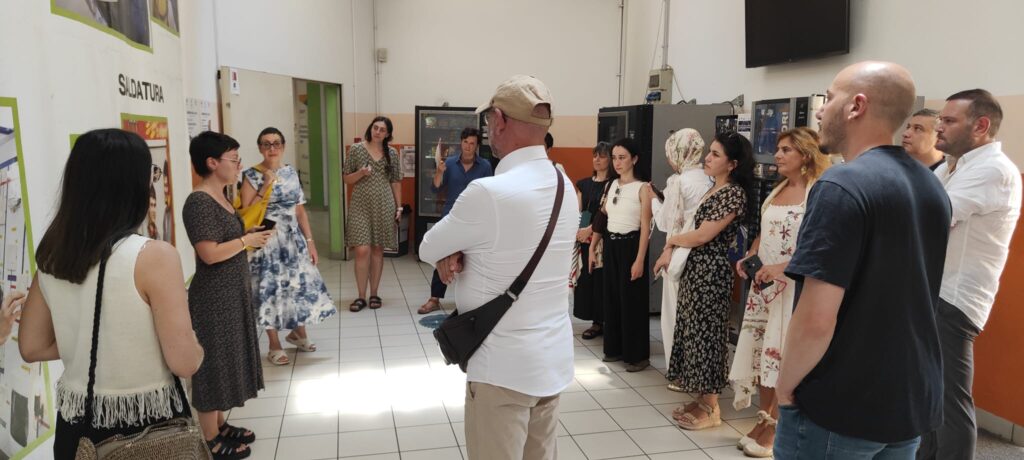
The MOBUILDING consortium met in Padua, Italy, on 15–16 July 2026 for its third Transnational Project Meeting, hosted by ENAIP Veneto. The meeting marked an important moment for the project, as partners moved from the analysis and design of the MOBUILDING approach towards the preparation of its practical implementation. Under WP2, TÜRKONFED presented the first draft of the Action Plan to Foster Apprenticeship Mobility in the Building Sector in Europe, designed to translate the barriers identified through the project’s research into strategic priorities and recommendations for action. Partners agreed to complete their contributions before its finalisation in August 2026. The meeting also provided an opportunity to see the first functionalities of the MOBUILDING European Platform for Apprenticeship Mobility in Building, presented by INFODEF, and to review progress on the Training Programme on Effective Management of Apprenticeship Mobility for the Building Sector. These two resources will provide organisations and professionals with a common digital environment and practical support for planning and managing apprenticeship mobility. A significant part of TPM3 focused on what comes next: putting the MOBUILDING approach into practice. Partners worked on the preparation of the pilot Apprenticeship Mobility Programme, including the selection of sending and hosting organisations and mobility participants, the development of supporting tools and the planning of mobility flows. The preparation phase was scheduled for the second half of 2026, with mobility experiences starting from January 2027. This work was complemented by discussions on the Building Apprenticeship Mobility Network, which will connect VET providers, companies, apprentices and other relevant stakeholders, and on the future Quality Assurance Protocol for Apprenticeship Mobility, which will be tested and validated alongside the pilot programme. Partners also had the opportunity to visit ENAIP Veneto’s school and laboratories, bringing the project discussions closer to the training environments in which vocational skills are developed, connecting the project’s work with the perspective of the labour market. Michelle Berzacola, HR Specialist at Elettromeccanica Veneta, joined the meeting to share the experience of the company and discuss its approach with MOBUILDING partners. They provided a concrete example of the relationship between training and employment. Elettromeccanica Veneta works in areas including electrical systems, industrial automation and technological solutions, and integrates different learning pathways into its activities, including internships, traineeships and dual apprenticeship contracts. It also invests in continuous employee training and career development. This exchange brought an important dimension to the meeting: understanding what companies need to participate effectively in training and mobility, and how stronger cooperation between VET providers and employers can contribute to meaningful work-based learning experiences. TPM3 showed how the different parts of MOBUILDING are beginning to come together: the evidence gathered through research is feeding into the Action Plan; the Platform and Training Programme are creating practical support for mobility actors; and the Network, Quality Assurance Protocol and pilot programme will provide the environment to test the project’s approach in practice.
New MOBUILDING report explores the barriers to apprenticeship mobility in the building sector
MOBUILDING has published its first major project result: the Baseline Analysis on Apprenticeship Mobility in the Building Sector (D2.1). The report provides an evidence-based overview of the main factors affecting apprenticeship mobility across the MOBUILDING countries, drawing on research into the experiences and perspectives of apprentices, VET providers, companies and other relevant stakeholders. Its analysis highlights a combination of legal and structural, administrative, economic, cultural and sector-specific barriers that can make international mobility particularly challenging in the building sector. It also underlines the important role of SMEs and the need for solutions that respond to the practical realities of construction workplaces. The Baseline provides the evidence base for the next stages of MOBUILDING. Its findings have directly informed the development of the project’s Action Plan to Foster Apprenticeship Mobility in the Building Sector in Europe, helping MOBUILDING move from identifying barriers to developing practical responses. Discover the Baseline Analysis and learn more about the challenges shaping apprenticeship mobility in Europe’s building sector.
Can mobility be part of the answer to skills shortages in the building sector?
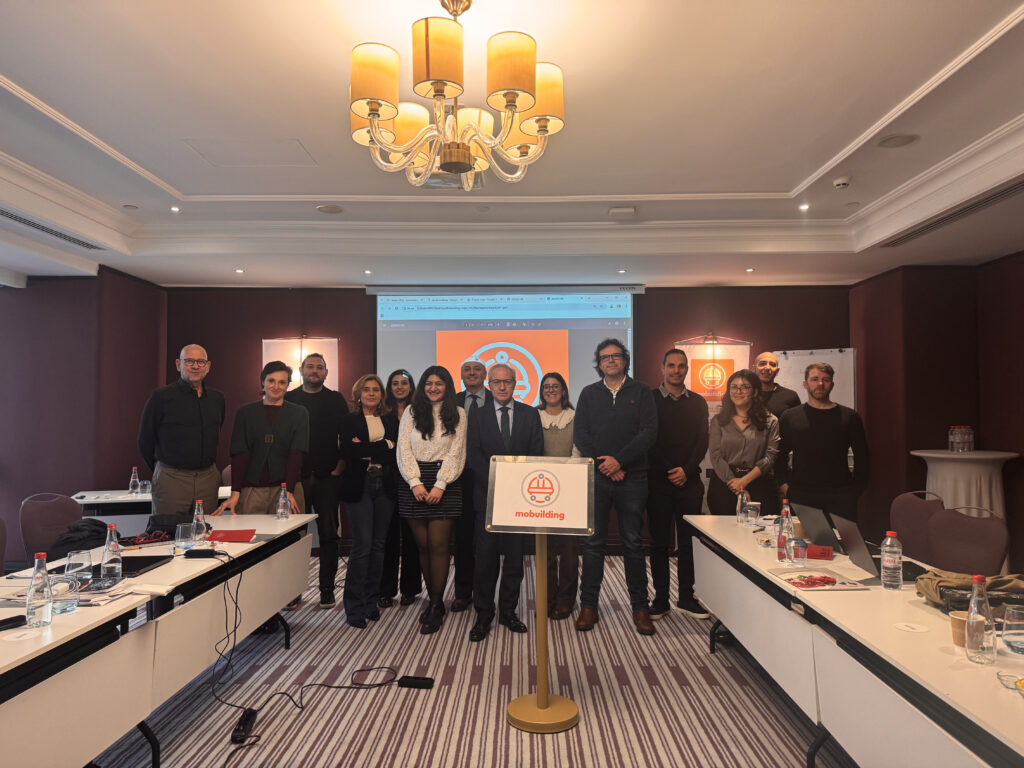
Mobility in VET is usually associated with apprentices and students spending a period abroad. But what happens when we look at mobility from a broader skills perspective? During the second MOBUILDING Transnational Project Meeting in Istanbul, Agustín Sigüenza, General Director of VET at the Regional Ministry of Education of Castilla y León, invited partners to explore this question through a presentation on Global Skills Partnerships (GSPs) and different mobility approaches. The starting point was an important distinction: mobility can support the practical training of apprentices abroad, but it can also facilitate the mobility of skilled workers and contribute to addressing skills and labour shortages. In other words, we are talking about different people, objectives and models: from traineeships, internships and apprenticeships for VET learners to reskilling and upskilling linked to worker mobility. And the building sector makes this discussion particularly relevant. In Spain, where the sector represented 5.6% of national GVA in 2021 and 5.2% of total employment in 2022, while facing a substantial need for workers. Looking ahead, around 740,000 job opportunities are expected in the sector between 2023 and 2035, around 170,000 of them linked to vocational training. At the same time, mobility is not straightforward. We find challenges ranging from language and recognition of qualifications to bureaucracy and legal barriers when recruiting internationally, and some very specific difficulties affecting VET mobility in the Spanish building sector: low participation in building-related VET, limited foreign-language proficiency among many learners and a preference among students for finding employment locally rather than considering opportunities abroad. Global Skills Partnerships are conceived as partnerships between countries of origin and destination that connect skills development and labour mobility, bringing together public and private actors. Their potential goes beyond filling vacancies: properly designed, they can respond to labour-market needs in destination countries while supporting skills development in countries of origin and incorporating the protection and interests of mobile workers. Existing approaches face challenges around private-sector engagement, funding, sustainability, time, scale, stakeholder complexity and regulatory frameworks. And this raises an interesting question: could stronger business-to-business (B2B) skills partnerships offer another way forward? A B2B approach could potentially create benefits on several sides: participants gain training and professional opportunities; employers can access skills that are difficult to find; and countries of origin may benefit from skills development and from workers who remain or eventually return with additional expertise. At the same time, these interests do not automatically align. What benefits an employer is not necessarily beneficial for the worker, the country of origin or the wider labour market in the destination country. One of the ideas explored was a model connecting companies, training centres, potential participants and public authorities across countries of origin and destination, with mobility, training and skills recognition supported through cooperation structures such as the future MOBUILDING network. MOBUILDING is not developing a Global Skills Partnership as such. But the discussion opens up a useful perspective for the project: how can we build mobility structures that work not only for individual apprentices, but also for VET providers, companies, public authorities and the wider skills ecosystem? That means looking beyond the mobility itself and asking how training, recognition, business participation, public governance and long-term cooperation can work together , because making mobility possible is only part of the challenge. Making it useful, fair and sustainable for everyone involved is the bigger one.
MOBUILDING partners meet in Istanbul to move from research to action
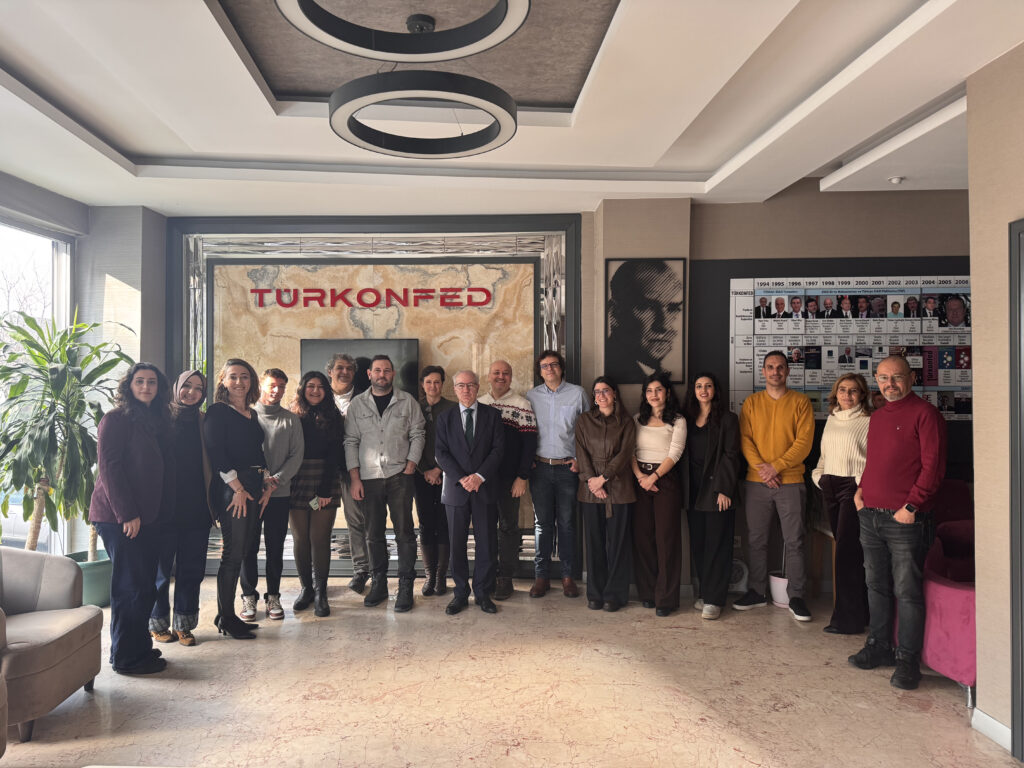
The MOBUILDING consortium gathered in Istanbul, Türkiye, on 13–14 January 2026 for its second Transnational Project Meeting, bringing partners together to review the progress achieved during the first months of the project and coordinate the next steps towards more accessible and effective apprenticeship mobility in the building sector. Hosted in Istanbul, the two-day meeting combined internal project coordination with exchanges involving education, business and mobility stakeholders, providing an opportunity to connect the work being developed within MOBUILDING with different perspectives on international apprenticeship and learning mobility. Beyond the internal project work, TPM2 provided an opportunity to look at apprenticeship mobility from different institutional and practical perspectives. D. Agustín Sigüenza, General Director of VET at the Regional Ministry of Education of Castilla y León, introduced Global Skills Partnerships and different approaches to international mobility, which contributed to a wider discussion within the consortium on how MOBUILDING can support different mobility models alongside the Erasmus+ framework. The second day broadened this exchange further along different sessions addresing the business perspective on the building sector and apprenticeship mobility, institutional approaches to international mobility in engineering and construction, students’ first-hand mobility experiences, and the contribution of companies involved in hosting or sending participants abroad. These exchanges helped connect the strategic work of MOBUILDING with the experiences and needs of the organisations and people directly involved in mobility, building the next steps together. Stay connected to follow the next steps of MOBUILDING!
MOBUILDING joined the EUROPEAN EXCELLENCE CENTER OPENING WEEK Science & Tech SPACE Park Skopje

From 12–18 September 2025, the MOBUILDING project took part in the EU Excellence Center SPACE Park Opening Week in Skopje, North Macedonia, a key European event dedicated to innovation, excellence, and cooperation in vocational education and training (VET). The SPACE Park initiative promotes the creation of regional hubs for excellence in VET, research, entrepreneurship and smart specialisation, in line with the EU’s goals for the digital and green transitions. The Opening Week brought together partners from across Europe, with a special focus on Smart Electricity, Advanced Manufacturing, Mobility, Digital Skills, and Sustainability. On 15 September, Jesús Boyano (INFODEF) presented MOBUILDING during the high-level session “EU-Funded Projects for Excellence”, where the project was highlighted as an innovative response to the challenges of apprenticeship mobility in the construction sector. The presentation showcased the project’s main outcomes, including its digital platform, training programme, policy tools, and pilot mobility experiences designed to support VET providers, SMEs, and apprentices across Europe. The session was part of a broader programme that included project showcases, keynote speeches, networking labs, and policy dialogues. MOBUILDING was presented alongside other major European initiatives such as SEBCoVE (Smart Electricity for Buildings) and ELeVATE (European Learning VET Alliance for Transition and Employment). Throughout the week, participants engaged in hands-on workshops, co-creation sessions, and thematic panels on how Centres of Vocational Excellence (CoVEs) can act as drivers for innovation and regional development. The event also featured demonstrations of new learning technologies, discussions on inclusive excellence, and the launch of cross-border partnerships aimed at scaling up impact. For MOBUILDING, the event was a valuable opportunity to strengthen its visibility, connect with other excellence-driven initiatives, and share its vision for a more mobile, skilled, and future-ready construction workforce in Europe.
MOBUILDING team joins the IV Vocational Education and Training Forum of Castilla y León

The IV Vocational Education and Training Forum of Castilla y León was held on April 8–9 at Valladolid Congress Centre (Spain). INFODEF’s director, Jesús Boyano Sierra, joined the roundtable on Mobility and Internationalisation, contributing insights from INFODEF’s and MOBUILDING team work on Centres of Vocational Excellence and our commitment to global cooperation in VET education. The forum gathered key voices from across Europe — from the European Commission, CEDEFOP, European Training Foundation, and EfVET to address the most pressing challenges and opportunities in vocational training today. The forum coincided with the Castilla y León Skills 2025 competition, highlighting the region’s young talents in fields like mechatronics, cooking, renewable energy, and more. This event is an important showcase that helps young people discover first-hand the various career alternatives available to them. Effective career guidance and an educational system that enhances Work-Based Learning experiences are key to unlocking their potential. MOBUILDING project team joined the event for these two remarkable days dedicated to vocational education and training, and to VET excellence.
Kick-off Meeting for MOBUILDING project launched in Valladolid, Spain

On April 9–10, INFODEF hosted the kick-off meeting of the MOBUILDING project in Valladolid, bringing together partners from seven countries for the first in-person meeting of the consortium. The event marked the formal launch of this ambitious initiative, which aims to enhance the mobility of apprentices in the European building sector through innovative tools, strategic partnerships, and policy-driven action. Prior to the meeting, partners participated in the Castilla y León Skills Forum and visited the Regional VET Skills Championship, gaining valuable insights into regional excellence strategies in vocational education and training. The meeting was officially opened by Agustín Francisco Sigüenza, General Director for VET at the Regional Government of Castilla y León, who welcomed the consortium and underlined the importance of European collaboration to modernise VET systems and improve apprentices’ employability. The project coordinator, Jesús Boyano (INFODEF), provided an overview of the project’s objectives and outlined its framework within European Policy Experimentation, emphasising its three guiding dimensions: – Policy and Advocacy – Experimentation – Mainstreaming During the two-day meeting, all partners presented their institutions, roles and expected contributions. The consortium, composed of nine partners from seven countries, includes VET providers, public authorities, business associations, research centres and policy stakeholders. The meeting also welcomed several associated and guest organisations from North Macedonia and Greece, contributing to the project’s openness and future outreach. The working sessions covered the structure and objectives of each Work Package, including and each session concluded with action points and deadlines to ensure a smooth and coordinated start to project activities. Key milestones discussed include the launch of the digital platform, the design of the training programme, and the upcoming research on institutional and structural barriers affecting apprenticeship mobility. The meeting also stressed the importance of visibility, impact, and quality assurance throughout the project’s lifecycle. A dedicated Communication Committee was established to lead outreach efforts, and INFODEF presented the first draft of the visual identity and communication tools. The Kick-off Meeting set a strong collaborative foundation for the MOBUILDING partnership, reaffirming the consortium’s commitment to building a more inclusive, connected, and future-oriented apprenticeship mobility system in the building sector.
MOBUILDING – A strategic approach to support mobility of apprentices in the building sector

MOBUILDING is an Erasmus+ Policy Experimentation initiative that aims to develop a strategic and sustainable approach to support, expand and institutionalise apprenticeship mobility in the building sector across Europe. A critical industry to Europe’s economy, as it is the building sector, needs action. Designing and implementing a digital and physical network and infrastructure to facilitate effective apprenticeship mobility, enhancing the capacity of VET providers, employers, and other stakeholders to engage in and support high-quality mobility experiences, address the legal, cultural, and educational barriers to mobility and promote more inclusive and accessible opportunities. Through these strategies and new resources, MOBUILDING will directly contribute to achieve the EU’s target of 8% mobility of VET learners, improve employment outcomes by aligning training more closely with industry needs, strengthen VET systems through sector-specific focus and transnational collaboration, and enhance policy integration by providing valuable insights and data to support the refinement of VET policies at both national and European levels. Main objectives The MOBUILDING project meticulously pursues enhancing the infrastructure for apprenticeship mobility, making it more efficient, scalable, and aligned with both regional and EU-wide policy objectives. With that focus on this core objective, the project also addresses: 1. Targeting barriers and structural obstacles to mobility of apprentices by: Develop an Inquiry into Apprentices’ journey through institutional and structural challenges for mobility in the building sector to identify key obstacles. Formulate an Action Plan to foster Apprenticeship Mobility in the Building Sector in Europe, providing a strategic, evidence-based framework to address barriers in mobility of apprentices. 2. Supporting sending and hosting organisations by: Make mobility a realistic possibility for any learner in the building sector IVET and CVET programmes, and increase the average duration of mobility for VET learners to boost its quality and impact. Build the capacity of VET providers to carry out high quality mobility projects, and their ability to form quality partnerships in the building sector while developing their internationalisation strategy. Foster the quality, transparency and recognition of learning outcomes of mobility periods abroad, especially by using European tools and instruments for this purpose. 3. Enhancing outreach to apprentices and employers and improving the quality of learning mobility experiences by: Synthesise findings and lessons learned from project development to draft evidence-based policy recommendations aimed at enhancing apprenticeship mobility in the building sector. Support partnerships between organisations to implement stable and regular mobility schemes in the building sector as part of the curricula and test new bilateral mobility opportunities derived from those partnerships. Create and implement quality assurance standards to ensure the effectiveness and quality of mobility programmes.


